VirFerrOx
Monstrous Metal mouth Mayhem: China’s Steel Emissions Surge
2025年7月25日星期五
Synopsis:
Based on CISA data & recent reports, emissions from China’s steel sector rose by 17.3% year‑on‑year in June 2025 despite a 3.6% drop in energy consumption. While pollution levels of sulfur dioxide, particulate matter & nitrogen oxides fell substantially, reliance on blast furnaces remains the key driver of the spike. The data highlights the paradox of cleaner processes failing to offset the continued carbon intensity of steelmaki

Blatant Blast‑Furnace Bloat
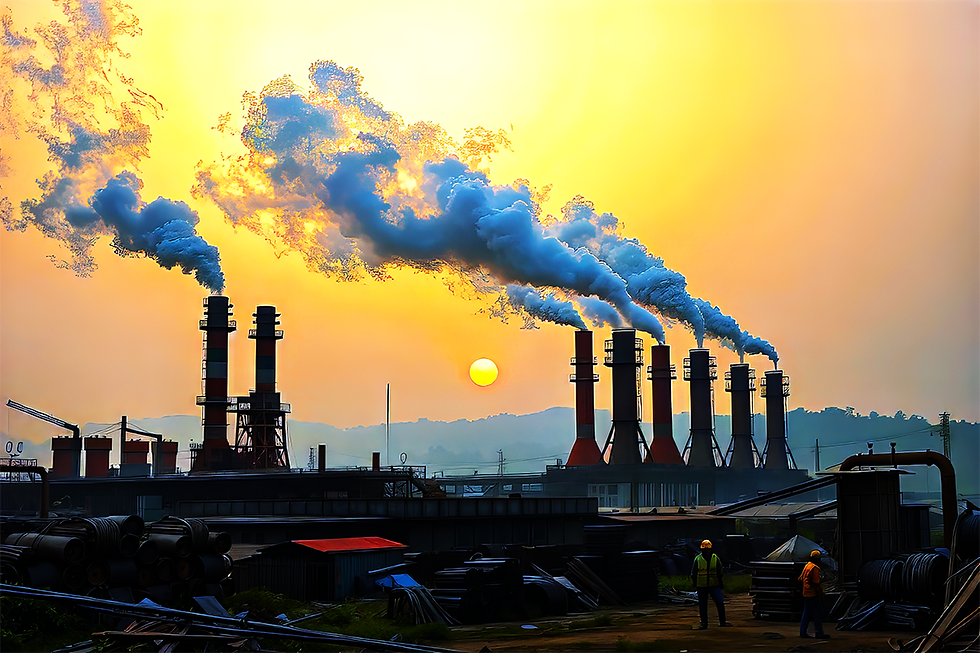
In June 2025, Chinese steel firms under the China Iron and Steel Association reported a staggering 17.3% year‑on‑year increase in total emissions from steel production. Ironically energy consumption across these enterprises fell by 3.6% over the same period. This divergence reflects the continued dominance of coal‑fired blast furnaces, whose heavy carbon intensity outweighs modest gains in efficiency. Despite retrofits & incremental improvements, these furnaces remain a sine qua non of capacity, locking emissions into a structurally elevated trajectory even as power usage declines. Vice chairman Jiang Wei emphasised the challenge, stating that ultra‑low emissions upgrades remain crucial though insufficient amid rising blast furnace liquidity.
Pollution Paradox & Particulate Progress
While overall carbon emissions soared, pollutant discharge fell significantly. Sulfur dioxide emissions dropped by 6.8%, particulate matter by 7% & nitrogen oxides by 9.2% year‑on‑year in June. Wastewater indicators improved too, chemical oxygen demand fell 12.8%, ammonia declined 12.3%. These reductions demonstrate effective abatement technologies in waste gas & water treatment systems. However despite cleaner effluents, the CO₂ surge underscores that surface‑level improvements cannot substitute for structural transformation in core emissions sources.
Energy Efficiency & Electricity Elevation
Total energy use per ton of steel increased by 1.8%, while comparable energy consumption rose by 2%; electricity consumption per ton climbed 4.3% year‑on‑year in June. Firms bolstered internal power generation, own electricity output rose 10.2%, increasing its share of total supply by 3.35 percentage points, and clean energy rose 51.8%, driven by wind jumping 655% & solar up 51.7% year‑on‑year . Yet rising per‑unit consumption indicates that while power sources shift, process inefficiencies persist, particularly in heat‑intensive metallurgy reliant on fossil fuels.
Inventory Inertia & Output Oscillation
Although daily crude steel output edged down by 0.9% in late June, averaging around 2.13 million metric tons per day, it reflected softer demand rather than proactive policy restraint. Finished product inventories increased mid‑June to 16.21 million metric tons, before falling to 15.45 million metric tons by late June, reflecting sales lag amid oversupply. These production dynamics highlight that capacity remains ample despite muted demand, enabling continued emission accumulation even as activity slows.
Ultra‑Low Emission Urgency
CISA has set a target for 80% of China’s steel production capacity to complete ultra‑low emission retrofits by the end of 2025-. As of April, 591 million metric tons of capacity had finished upgrades, while another 169 million had partial compliance. Yet those gains offset only surface‑level pollutants; CO₂ emissions continued to rise 4.1% in 2024 across the industry amidst declining production. The vice chairman noted that although abatement targets meet regulatory standards, reliance on blast furnace-based output threatens to thwart carbon goals unless production structure itself changes.
Hydrothermal Haze & Water Wastage
Water withdrawal among member firms rose by 2.2%, water reuse fell 0.9 percentage points to 98.34%; water consumption per ton of steel increased 3.3% year‑on‑year to 2.5 m³. Although reuse remains high, rising per‑unit water demand signals inefficiencies in industrial cooling & treatment systems. Wastewater chemical oxygen demand and ammonia loads also declined ~9‑12%, showing improved effluent quality, yet overall water intensity remains elevated in relative terms.
Clean Energy Expansion Amid Carbon Cling
The clean power surge, from wind & solar, is significant: nearly half growth in electricity supply derived from renewables. Yet the steel sector’s share of clean energy remains limited. Although non‑fossil production rose 51.8% in June year‑on‑year, reliance on combustible gases from blast furnace, converter & coke oven lines exceeds 98%, reflecting deep structural dependence on fossil‑based metallurgy.
Emission Equilibrium Exists Elsewhere Yet Eludes Steel
Reddit‑based analysis suggests China’s broader CO₂ emissions may have peaked in 2023, driven by clean energy expansion that supplied 90% of new power demand growth and reduced emissions from construction & cement sectors. Still steel emissions diverged from national trends. The CISA data for June confirms that while overall emissions trend downward nationally, steel remains a stubborn outlier. Global decarbonisation demands urgent sectoral reform if climate commitments, such as peaking before 2030, are to remain credible.
Key Takeaways
• June 2025 steel sector emissions rose by 17.3% year‑on‑year despite a 3.6% drop in energy consumption.
• While pollution levels for SO₂, particulate matter & nitrogen oxides declined significantly, CO₂ surged due to heavy blast furnace reliance.
• Clean energy generation jumped by over 50%, but structural change in production methods remains essential to decarbonise China’s steel industry.

VirFerrOx
Tariff Tapestry Transforms Trade Trajectories
2025年7月30日星期三

VirFerrOx
Hydrogen Hegemony Heralds Hope at Juiz de Fora
2025年7月30日星期三

VirFerrOx
Tata & Tenova Triumph Transformative Technology
2025年7月30日星期三

VirFerrOx
Volta Vision Validates Valorous Voyage at Algoma Steel
2025年7月30日星期三

VirFerrOx
Severstal Spurs Sustainability via Sophisticated Salvage
2025年7月30日星期三

VirFerrOx
Green Growth Galvanises Gargantuan Gains in India Steel
2025年7月30日星期三

VirFerrOx
Gulf’s Green Gambit Galvanizes Global Growth
2025年7月30日星期三
VirFerrOx
Tribunal Tirade Targets Tepid Thrust in Punjab’s Steel Town
2025年7月30日星期三

VirFerrOx
Celestial Strategy Curtails Continental Collaboration
2025年7月30日星期三

VirFerrOx
Low-Emission Lexicon Lends Lucidity to Steel Standards
2025年7月29日星期二
VirFerrOx
Monstrous Metal mouth Mayhem: China’s Steel Emissions Surge
2025年7月25日星期五

VirFerrOx
Calix’s Clean Calciner Catalyses Climate-Conscious Construction
2025年7月25日星期五

VirFerrOx
Emergent Emissive Eco Evolution Of TISCO
2025年7月25日星期五

VirFerrOx
Hydrogen Harnessing: Hegemonic Hydrogen-Ready Linepipe Harnesses High-Tech
2025年7月25日星期五

VirFerrOx
Methane Mobilisation Mirthfully Mints Hydrogen Momentum
2025年7月25日星期五

VirFerrOx
Provincial Pact Propels Pipeline & Power Progression Across Canada
2025年7月25日星期五

VirFerrOx
Biobattery Breakthrough Bolsters Binghamton Brilliance
2025年7月24日星期四

VirFerrOx
Doughty Duferco Debuts Dynamic Duferco Iberia
2025年7月24日星期四

VirFerrOx
Salzgitter's Sustained Silver Sustainability Surge
2025年7月24日星期四

VirFerrOx
Erciyas’s Epochal Enterprise Empowers EU’s Hydrogen Hopes
2025年7月24日星期四

VirFerrOx
Verdant Vanguard: HBIS Hydrogen Steel Harbors Historic European Export
2025年7月24日星期四

VirFerrOx
Decarbonising Driveways & Drivetrains: India’s Auto Ascendancy
2025年7月24日星期四

VirFerrOx
Algeria’s Ambitious Augury Anchors Advanced Alloy Aspirations
2025年7月24日星期四

VirFerrOx
Stymied Steel Shift Sparks Sino Soul-Searching
2025年7月24日星期四

VirFerrOx
Decarbonization Dilemmas & Dunkirk DRI Disenchantment
2025年7月24日星期四

VirFerrOx
Hertha’s Heroic Heatcraft Heralds Homegrown Hope
2025年7月23日星期三

VirFerrOx
Pinkenba Pact Propels Pioneering Plant Plans
2025年7月23日星期三

VirFerrOx
Viridis Vision Vindicates Virtuous Ventures in Steel
2025年7月23日星期三

VirFerrOx
Biodiesel Boon Bolsters Bold Bid to Banish CO₂ Burden
2025年7月23日星期三

VirFerrOx
Luminous Liaison LCA Leads Low-Carbon Leap in Steel
2025年7月23日星期三

VirFerrOx
Jharkhand’s Juggernaut Journey, Just Transition & Judicious Green Finance
2025年7月23日星期三

VirFerrOx
BHP’s Bold Blueprint, Beyond Blast Furnaces & Burdensome Coal
2025年7月23日星期三

VirFerrOx
Kami Kinship, Kompacts & Kapital Forge Ironclad Future
2025年7月23日星期三

VirFerrOx
Gonvarri’s Grand Green Gamble, AgriPV Trackers Transform Tuscany
2025年7月23日星期三

VirFerrOx
Colzè Chronicles, Currents & Conservation Catalyse Clean Power
2025年7月23日星期三

VirFerrOx
Numaligarh Navigates Nuances, Nudges Assam’s Green Hydrogen Hope
2025年7月23日星期三

VirFerrOx
HYPRPlant Heralds Hydrogen Horizons, Validated by DNV
2025年7月23日星期三

VirFerrOx
Carbon Conundrum & Cautious Calls Cushion Competitiveness
2025年7月22日星期二

VirFerrOx
Solar Synchronicity Spurs Sustainable Steel Saga
2025年7月22日星期二

VirFerrOx
Wuppermann’s Widened WTopCor & WProtect Carbon Calculus
2025年7月22日星期二

VirFerrOx
Margam Metamorphosis Melds Modernity & Megawatt Might
2025年7月22日星期二

VirFerrOx
Salutary Safeguards Stall Steel Slag Scenarios
2025年7月22日星期二

VirFerrOx
Hornsea Heralds Hopeful Horizons at Historic Teesworks
2025年7月22日星期二

VirFerrOx
Tenova Triumphs, Ternium’s Tenacious Tech Transformation
2025年7月21日星期一

VirFerrOx
Argentine Arcadia, Acindar’s Audacious Aeolian & Auroral Aim
2025年7月21日星期一

VirFerrOx
Algorithmic Alchemy, ArcelorMittal’s AI Accolade Ascent
2025年7月21日星期一

VirFerrOx
Arequipa’s Accolade, Acclaim & Ascent in Sustainable Stewardship
2025年7月21日星期一

VirFerrOx
Industrious Italy Inspires Inclusive Innovation & Iron Initiatives
2025年7月19日星期六

VirFerrOx
Catalytic CBAM Conundrum Compels Clarity Calls
2025年7月19日星期六

VirFerrOx
Convoluted Calculus & Cacophony Cloud CBAM Countdown
2025年7月19日星期六

VirFerrOx
Collaborative Chemical Confluence Catalyses Climate Custodian
2025年7月19日星期六

VirFerrOx
Galvanised Green Gains Garner Gracious Ground Globally
2025年7月19日星期六

VirFerrOx
XCMG Clinches Coveted Contract & Cultivates Carbonless Course
2025年7月19日星期六

VirFerrOx
Whirlwind Wins Wrought by Yamamah & Wind Wonders
2025年7月19日星期六

VirFerrOx
Hanseatic Hope, Hamburg Harnesses Harmonious Green Girders
2025年7月18日星期五
VirFerrOx
Hanseatic Hope, Hamburg Harnesses Harmonious Green Girders

VirFerrOx
Carbon Conclaves & Circular Credos Charm Coke Conclave
2025年7月18日星期五

VirFerrOx
FuelEU Formalities & Flexibilities Forge Forward Frameworks
2025年7月18日星期五

VirFerrOx
Canny Curtailment & Cathode Constraints Cushion China Concerns
2025年7月18日星期五

VirFerrOx
Pilbara Prudence & Pragmatic Projections Perplex Policy
2025年7月17日星期四

VirFerrOx
Carbon Conundrum & CBAM Confluence Confound Continents
2025年7月17日星期四

VirFerrOx
Paradoxical Premiums Persist Amid Pallid Procurement
2025年7月17日星期四

VirFerrOx
Scrap Synergy Spurs Steel Sustainability Strategy
2025年7月17日星期四

VirFerrOx
Steel Saga Spurs Swift & Sustainable Ukrainian Succour
2025年7月17日星期四

VirFerrOx
Purposive Pipelines & Pristine Purity Propel Progress
2025年7月17日星期四

VirFerrOx
Terengganu’s Tenacious Thrust Transforms TNB & Transition
2025年7月17日星期四

VirFerrOx
SeAH Secures Solar Synergy Signing Sustained Supply
2025年7月17日星期四

VirFerrOx
Methane Metrics Manifest Methodical Mitigation Mission
2025年7月17日星期四

VirFerrOx
Pilbara Pact Propels Prime Minister’s Progressive Pledge
2025年7月16日星期三

VirFerrOx
Plasma Prowess Powers Pyrogenesis’ Pioneering Project
2025年7月16日星期三

VirFerrOx
Galvanic Gambit Gains Ground Garnering Green Glory
2025年7月16日星期三

VirFerrOx
Sustainable Synergy Spurs SSAB & Solutions Steel Shift
2025年7月16日星期三

VirFerrOx
Tenaris’ THera Triumph Transforms Tangential Transit
2025年7月16日星期三

VirFerrOx
Verdant Vision Vanya Ventures into Viable Vitality
2025年7月16日星期三

VirFerrOx
From Grey Goliath to Green Grail: China’s Herculean Steel Decarbonisation
2025年7月15日星期二

VirFerrOx
BIR Blazon & Balanced Blueprint: Rally for Fair Green Steel Standards
2025年7月15日星期二

VirFerrOx
Titanic Transformation & Tenacious Turnaround at Tata UK
2025年7月15日星期二

VirFerrOx
Harmonious Hydnum & Holistic Hopes: Puertollano’s Green Steel Saga
2025年7月15日星期二

VirFerrOx
BHP’s Bilateral Battery Bet: Pioneering Partnerships with BYD & CATL to Decarbonise Mining
2025年7月15日星期二

VirFerrOx
Usiminas Unveils Unprecedented Outlay for Ore Optimisation
2025年7月15日星期二

VirFerrOx
Carbon Conundrum & Constraining Cost Cloud Steel Surge
2025年7月14日星期一

VirFerrOx
Carbon Conundrum & Climatic Caprice Complicate Costs
2025年7月14日星期一

VirFerrOx
Turquoise Triumph Transforms Ternium's Thermal Thrust
2025年7月14日星期一

VirFerrOx
Aceros Advances Alluringly, Adopting Avant-Garde Vertical Kiln
2025年7月14日星期一

VirFerrOx
Solar Soars & Surpasses Sparking Shift in EU Sector
2025年7月14日星期一

VirFerrOx
Pioneering Pilbara Project Picks Powerful Partner
2025年7月12日星期六

VirFerrOx
Pioneering Permits Propel Power4Steel Paradigm
2025年7月12日星期六

VirFerrOx
Piombino Pact Propels Pioneering Plant & Pan-European Partnership
2025年7月12日星期六
.png)
VirFerrOx
BIR’s Bold Blueprint, Backing Balanced Benchmarks for Green Steel
2025年7月12日星期六

VirFerrOx
Sustainability Saga & Steel Stewardship Spark Ovako’s Success
2025年7月12日星期六

VirFerrOx
Magnitogorsk Melds Modernisation & Meticulous Mitigation
2025年7月12日星期六

VirFerrOx
Sørlige Saga & Subsea Safeguards Seal Sustainable Success
2025年7月12日星期六

VirFerrOx
Trump Tariffs & Tax Tangles Threaten Thrifty & Thriving Steel
2025年7月11日星期五

VirFerrOx
Celestial Commitments & Carbon Cuts Crown China’s Clean Crusade
2025年7月11日星期五

VirFerrOx
Coal Conundrum & Carbon Conundrums Cloud Clean Steel
2025年7月11日星期五

VirFerrOx
Arc Ascendancy & Algoma’s Audacious Alloying Aim
2025年7月11日星期五

VirFerrOx
Molten Milestone Magnifies Boston Metal’s Metals Mission
2025年7月11日星期五

VirFerrOx
Adaptive Alloy Alchemy & AI Advance Adapt-EAF Aspiration
2025年7月11日星期五

VirFerrOx
Turkey’s EAF Edge Elevates EU Export Eminence
2025年7月11日星期五
