FerrumFortis
Sinic Steel Slump Spurs Structural Shift Saga
Wednesday, July 30, 2025

FerrumFortis
Metals Manoeuvre Mitigates Market Maladies
Wednesday, July 30, 2025

FerrumFortis
Senate Sanction Strengthens Stalwart Steel Safeguards
Wednesday, July 30, 2025

FerrumFortis
Brasilia Balances Bailouts Beyond Bilateral Barriers
Wednesday, July 30, 2025

FerrumFortis
Pig Iron Pause Perplexes Brazilian Boom
Wednesday, July 30, 2025

FerrumFortis
Supreme Scrutiny Stirs Saga in Bhushan Steel Strife
Wednesday, July 30, 2025

FerrumFortis
Energetic Elixir Enkindles Enduring Expansion
Wednesday, July 30, 2025

FerrumFortis
Slovenian Steel Struggles Spur Sombre Speculation
Wednesday, July 30, 2025

FerrumFortis
Baogang Bolsters Basin’s Big Hydro Blueprint
Wednesday, July 30, 2025

FerrumFortis
Russula & Celsa Cement Collaborative Continuum
Wednesday, July 30, 2025

FerrumFortis
Nucor Navigates Noteworthy Net Gains & Nuanced Numbers
Wednesday, July 30, 2025

FerrumFortis
Volta Vision Vindicates Volatile Voyage at Algoma Steel
Wednesday, July 30, 2025

FerrumFortis
Coal Conquests Consolidate Cost Control & Capacity
Wednesday, July 30, 2025

FerrumFortis
Reheating Renaissance Reinvigorates Copper Alloy Production
Friday, July 25, 2025

FerrumFortis
Steel Synergy Shapes Stunning Schools: British Steel’s Bold Build
Friday, July 25, 2025

FerrumFortis
Interpipe’s Alpine Ascent: Artful Architecture Amidst Altitude
Friday, July 25, 2025

FerrumFortis
Magnetic Magnitude: MMK’s Monumental Marginalisation
Friday, July 25, 2025

FerrumFortis
Hyundai Steel’s Hefty High-End Harvest Heralds Horizon
Friday, July 25, 2025

FerrumFortis
Trade Turbulence Triggers Acerinox’s Unexpected Earnings Engulfment
Friday, July 25, 2025

FerrumFortis
Robust Resilience Reinforces Alleima’s Fiscal Fortitude
Friday, July 25, 2025
Wind-Assisted Propulsion Systems: A Paradigm Shift
The maritime industry stands on the precipice of a transformative era, driven by the urgent necessity for decarbonization and sustainable practices. Wind-assisted propulsion systems (WAPS) emerge as a pivotal innovation, poised to revolutionize shipping operations. DNV's recent whitepaper meticulously examines the multifaceted advantages of WAPS, underscoring their potential to significantly reduce fuel consumption and emissions. As the industry grapples with stringent environmental regulations, WAPS present a compelling case for shipowners seeking to enhance operational efficiency while adhering to compliance mandates.
Knut Ørbeck-Nilssen, CEO of Maritime at DNV, articulates the essence of this transition, stating, “As we navigate the maritime energy transition, it's crucial to consider all options for decarbonization.” This sentiment encapsulates the industry's collective ambition to harness innovative technologies that align economic viability with ecological responsibility. The whitepaper serves as a clarion call for stakeholders to embrace WAPS as an integral component of their sustainability strategies.
Decoding Design Dynamics: Technical Feasibility Unveiled
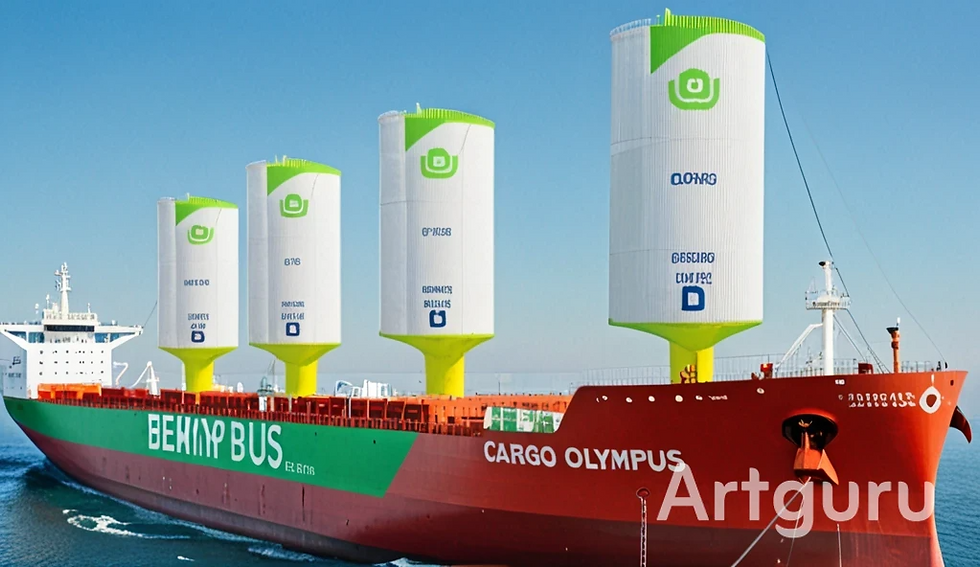
The intricate interplay of design and operational factors plays a pivotal role in determining the efficacy of WAPS. DNV's comprehensive analysis delves into the technical feasibility of these systems, offering a roadmap for shipowners to evaluate their applicability. The report emphasizes that retrofitting existing vessels is feasible for most ships, provided they possess adequate deck space and unobstructed airflow. This adaptability positions WAPS as an accessible option for a diverse array of vessels, including tankers and general cargo ships.
Hasso Hoffmeister, Senior Principal Engineer at DNV, elaborates on the technological advancements underpinning WAPS, noting, “Current WAPS technologies use advanced control and automation systems, combining aerodynamics, automation, computer modelling, and modern materials.” This synergy of innovation not only enhances performance but also mitigates the barriers to adoption. As shipowners explore retrofitting opportunities, the prospect of integrating WAPS into new vessel designs offers even greater optimization potential, propelling the industry toward a more sustainable future.
Economic Imperatives: Compliance & Cost Efficiency
The economic rationale for adopting WAPS is fortified by the dual pressures of compliance and cost efficiency. As the maritime sector faces escalating regulatory demands, including the Energy Efficiency Design Index (EEDI) and the upcoming International Maritime Organization (IMO) regulations, WAPS emerge as a strategic asset. These systems not only contribute to meeting stringent CO₂ emission requirements but also enhance the Carbon Intensity Indicator (CII) ratings, thereby improving a vessel's overall environmental performance.
The financial implications of integrating WAPS are profound. By reducing fuel consumption, shipowners can realize significant cost savings while simultaneously enhancing their competitive edge in an increasingly regulated market. DNV's analysis highlights that WAPS technologies are not merely an environmental solution but a robust business strategy, aligning profit motives with sustainability objectives. As the industry evolves, the economic benefits of WAPS will become increasingly pronounced, solidifying their role as a sine qua non for modern maritime operations.
Case Studies: Real-World Applications of WAPS
To elucidate the practical applications of WAPS, DNV's whitepaper presents two compelling case studies conducted in EU waters. These models showcase how different WAPS installations can effectively mitigate fuel costs while complying with the European Union's Emissions Trading System (EU ETS) and FuelEU Maritime regulations.
The first case study examines a retrofitted tanker, where the integration of rotor sails resulted in a remarkable reduction in fuel consumption, translating into substantial operational savings. The second case study focuses on a general cargo vessel utilizing suction sails, demonstrating the versatility of WAPS technologies across various vessel types. These empirical examples underscore the tangible benefits of WAPS, providing a blueprint for future implementations within the maritime sector.
Technological Innovations: The Future of WAPS
As the maritime industry continues to innovate, the future of WAPS looks promising. The integration of advanced technologies, such as automation and computer modeling, enhances the performance and reliability of these systems. DNV's commitment to developing rules and standards for WAPS certification underscores the organization's leadership in this burgeoning field.
The introduction of the “WAPS Ready” notation exemplifies DNV's proactive approach, facilitating compliance verification for future installations. This modular methodology not only streamlines the certification process but also encourages shipowners to adopt WAPS technologies with confidence. As the industry anticipates the launch of the first pure wind-powered large cargo vessel, Orcelle, the momentum behind WAPS continues to build, heralding a new era of sustainable shipping practices.
Navigating Regulatory Waters: The Role of Standards
The regulatory landscape surrounding maritime emissions is evolving rapidly, necessitating a proactive approach from shipowners. DNV's whitepaper emphasizes the critical role of standards in facilitating the adoption of WAPS technologies. By establishing clear guidelines for the verification and certification of these systems, DNV empowers shipowners to navigate the complexities of compliance while maximizing the benefits of WAPS.
The ST-0511 “Wind Assisted Propulsion Systems” certification standard, introduced by DNV, serves as a cornerstone for ensuring the integrity and efficacy of WAPS technologies. As the maritime sector adapts to new regulations, the alignment of WAPS with compliance frameworks will be instrumental in driving widespread adoption. This regulatory foresight positions WAPS as a key player in the maritime decarbonization journey, offering a sustainable pathway for shipowners to meet their environmental obligations.
The Path Forward: Embracing WAPS for Sustainable Shipping
As the maritime industry confronts the challenges of climate change and regulatory compliance, the adoption of WAPS technologies emerges as a beacon of hope. The insights gleaned from DNV's whitepaper illuminate the path forward, encouraging shipowners to embrace innovative solutions that align economic viability with environmental stewardship.
The momentum behind WAPS is palpable, driven by a confluence of factors, including technological advancements, regulatory pressures, and economic imperatives. As the industry collectively pivots toward sustainability, WAPS technologies stand ready to play a pivotal role in reshaping maritime operations for the better. By harnessing the power of wind, shipowners can not only reduce their carbon footprint but also secure a competitive advantage in an increasingly eco-conscious marketplace.
OREACO Lens: A New Era of Maritime Innovation
In conclusion, the maritime industry's embrace of wind-assisted propulsion systems marks a significant step toward a more sustainable future. DNV's comprehensive analysis provides a robust framework for understanding the potential of WAPS technologies, highlighting their role in reducing fuel consumption and emissions. As shipowners navigate the complexities of compliance and cost efficiency, WAPS emerge as a compelling solution, aligning profitability with environmental responsibility.
The journey toward decarbonization is fraught with challenges, but the insights gleaned from DNV's whitepaper illuminate a clear path forward. By embracing innovation and collaboration, the maritime industry can chart a course toward a sustainable future, where wind-assisted propulsion systems play an integral role in shaping the next generation of shipping practices.
Key Takeaways
- Wind-assisted propulsion systems (WAPS) present a viable solution for maritime decarbonization, offering significant fuel savings and emissions reductions.
- DNV's whitepaper provides a comprehensive analysis of WAPS technologies, emphasizing their adaptability for retrofitting existing vessels and optimizing new designs.
- As regulatory pressures mount, WAPS emerge as a strategic asset for shipowners, aligning economic viability with compliance and sustainability objectives.
VirFerrOx
Navigating Nautical Necessities: Wind-Assisted Propulsion's Promise
By:
Nishith
Thursday, November 27, 2025
Synopsis:
A recent report by DNV highlights the burgeoning interest in wind-assisted propulsion systems (WAPS) as a viable solution for maritime decarbonization. The whitepaper outlines design and operational factors influencing fuel savings, showcasing case studies that model effective WAPS installations in EU waters. As shipping faces stricter emission regulations, WAPS technologies are positioned to deliver significant fuel savings and emissions reductions, thereby enhancing the business case for shipowners.