>
English
>
FerrumFortis
>
Aliağa Explosion: Death Toll Rises at Habaş Steelworks as Cause Remains Unconfirmed

FerrumFortis
Sinic Steel Slump Spurs Structural Shift Saga
Wednesday, July 30, 2025

FerrumFortis
Metals Manoeuvre Mitigates Market Maladies
Wednesday, July 30, 2025

FerrumFortis
Senate Sanction Strengthens Stalwart Steel Safeguards
Wednesday, July 30, 2025

FerrumFortis
Brasilia Balances Bailouts Beyond Bilateral Barriers
Wednesday, July 30, 2025

FerrumFortis
Pig Iron Pause Perplexes Brazilian Boom
Wednesday, July 30, 2025

FerrumFortis
Supreme Scrutiny Stirs Saga in Bhushan Steel Strife
Wednesday, July 30, 2025

FerrumFortis
Energetic Elixir Enkindles Enduring Expansion
Wednesday, July 30, 2025

FerrumFortis
Slovenian Steel Struggles Spur Sombre Speculation
Wednesday, July 30, 2025

FerrumFortis
Baogang Bolsters Basin’s Big Hydro Blueprint
Wednesday, July 30, 2025

FerrumFortis
Russula & Celsa Cement Collaborative Continuum
Wednesday, July 30, 2025

FerrumFortis
Nucor Navigates Noteworthy Net Gains & Nuanced Numbers
Wednesday, July 30, 2025

FerrumFortis
Volta Vision Vindicates Volatile Voyage at Algoma Steel
Wednesday, July 30, 2025

FerrumFortis
Coal Conquests Consolidate Cost Control & Capacity
Wednesday, July 30, 2025
FerrumFortis
Reheating Renaissance Reinvigorates Copper Alloy Production
Friday, July 25, 2025

FerrumFortis
Steel Synergy Shapes Stunning Schools: British Steel’s Bold Build
Friday, July 25, 2025

FerrumFortis
Interpipe’s Alpine Ascent: Artful Architecture Amidst Altitude
Friday, July 25, 2025

FerrumFortis
Magnetic Magnitude: MMK’s Monumental Marginalisation
Friday, July 25, 2025

FerrumFortis
Hyundai Steel’s Hefty High-End Harvest Heralds Horizon
Friday, July 25, 2025

FerrumFortis
Trade Turbulence Triggers Acerinox’s Unexpected Earnings Engulfment
Friday, July 25, 2025

FerrumFortis
Robust Resilience Reinforces Alleima’s Fiscal Fortitude
Friday, July 25, 2025
Noon in Bozköy & a Toll That Kept Rising Shortly before midday on 9 November, an explosion tore through the Habaş iron and steel plant in the Bozköy neighbourhood of Aliağa, in İzmir province on Turkey's Aegean coast. The İzmir Governor's Office first reported three dead and 14 injured, three of them seriously; by mid-afternoon it had raised the toll to six as one hospitalised worker died and two more bodies were recovered from debris, with search-and-rescue teams still working to reach people believed trapped . By evening, international outlets citing Turkish officials and President Recep Tayyip Erdoğan reported at least 16 dead and 13 injured, with the blast timed at 11:46 local time . The figures are provisional and may rise further as rescue operations conclude. The immediate significance is human first: this is one of the deadliest industrial accidents at a Turkish steelworks in recent memory, in a town whose economy is built on steel. The industrial questions, about cause, about safety at a major producer, and about supply from one of Turkey's largest mills, are secondary and should wait for facts.
Cranes, Furnaces & the Governor's First Assessment The only official account of cause so far is the governor's initial assessment, reported by SteelOrbis, that an overhead crane broke loose and fell into an electric arc furnace during liquid steel casting operations . If accurate, the mechanism would be a known catastrophic scenario in steelmaking: a heavy object or water entering a vessel of molten steel at around 1,600 °C can cause violent eruptions, and a crane carrying a ladle, scrap bucket, or cooling water would multiply the risk. Melt shops are engineered against this with crane inspection regimes, load limits, and exclusion zones during tapping and casting, which is why such events are rare. Authorities have launched an investigation and emphasised that the assessment is preliminary. It should be read that way; early attributions after industrial explosions are frequently revised once engineers examine the site.
Gas Lines, Social Media & the Competing Account A conflicting account circulating online places the explosion at a carbon dioxide filling facility within the Habaş complex rather than at the furnace . This is not from an official source and has not been confirmed by the governor's office or Turkish authorities, and OREACO does not treat it as established. It is noted because Habaş is, alongside its steel business, Turkey's largest industrial-gases producer, with gas plants on the same Aliağa site, so the two accounts are not implausible on their face and the distinction matters for the investigation. A furnace eruption and a pressurised-gas vessel failure have different causes, different regulatory implications, and different lessons. Until investigators report, the responsible position is that the cause is unconfirmed and that two different mechanisms have been publicly suggested, only one by officials.
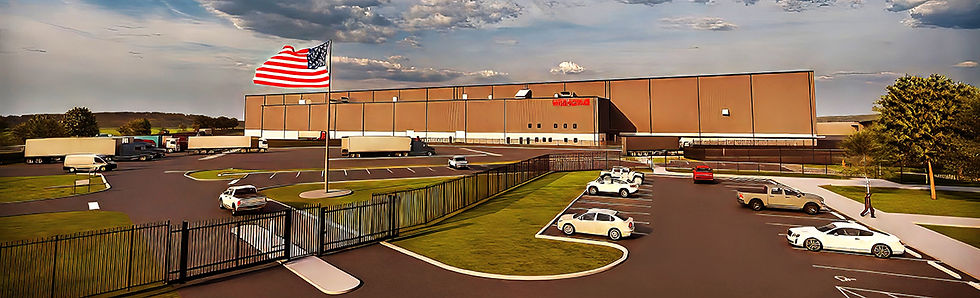
Habaş, Aliağa & the Cluster at the Heart of Turkish Steel Habaş Sınai ve Tıbbi Gazlar is a privately held conglomerate whose steel arm operates electric arc furnaces, billet and slab casting, and long- and flat-product rolling at Aliağa, with capacity in the several-million-tonne range, making it one of Turkey's top producers and a major scrap importer. In March 2026 the company announced plans for an additional melt shop in Hatay . Aliağa itself is the centre of Turkey's scrap-based steel industry, hosting several large electric-furnace mills, a petrochemical complex, and a shipbreaking yard, and it is the single largest destination for the scrap Turkey imports from Europe and the United States. An extended outage at Habaş would be felt in Turkish rebar and billet supply and in the import scrap market, where Turkish buying sets global reference prices; but the plant's status is not yet known, and speculation about market effects on the day of a fatal accident is premature.
Safety Records, Soma & the Weight of Turkish Precedent Turkey's industrial-safety record is a sensitive subject. The 2014 Soma coal mine disaster, which killed 301 miners, led to legislative changes and remains a reference point in public debate; subsequent mine, factory, and construction accidents have kept scrutiny on enforcement. Steelmaking in Turkey has generally had a better record than mining, and large producers such as Habaş operate under occupational-safety law aligned in part with EU frameworks. Nonetheless, a death toll of this magnitude at a single melt shop will prompt questions about inspection intervals for cranes, procedures during casting, emergency response, and the proximity of workers to high-hazard operations. Those questions are legitimate but should be answered by the investigation, not assumed. Prosecutors in Turkey typically open parallel criminal inquiries after fatal workplace accidents, and a judicial process alongside the technical one is likely.
Molten Metal, Mass & the Physics of a Melt-Shop Explosion For readers outside the industry, the destructive potential of a melt shop lies in energy density. An electric arc furnace holds tens to more than a hundred tonnes of liquid steel; a ladle in transit carries similar quantities. If water, moisture-bearing material, or a large cold mass enters the melt, rapid vaporisation or displacement can eject metal and slag at high velocity across the shop floor. Overhead cranes rated for hundreds of tonnes run on rails above these vessels, and their failure, whether through structural fatigue, hoist malfunction, or operator error, is among the most serious credible events a plant designs against. This context explains why the governor's first assessment is plausible, not why it is correct. It also explains why casualty counts in such incidents can rise over hours: debris, heat, and collapsed structures slow access to the area around the furnace.
Investigation, Accountability & What Comes Next The near-term sequence is predictable in form if not in content. Rescue operations will conclude and a final casualty figure will be released; the governor's office and the Ministry of Labour and Social Security will issue findings; prosecutors may bring charges if negligence is found; and Habaş will have to assess damage to the melt shop before any restart. The company had not issued a detailed public statement at the time of the sources cited here. For the wider industry, the accident will be studied for lessons on crane integrity and casting-zone controls regardless of the final cause. For Aliağa, a town of some 100,000 people where steel is the main employer, the loss is immediate and personal. OREACO will update its account as official information replaces provisional figures and preliminary assessments .
OREACO Lens: A Fatal Blast and the Discipline of Not Knowing Yet
READ. The fundamental development the sources describe is a fatal explosion at Habaş's Aliağa steelworks at around 11:46 on 9 November 2026, with the official toll rising from three to six by mid-afternoon and to at least 16 dead and 13 injured by later reports, rescue operations continuing, and the governor's preliminary assessment pointing to a crane falling into an electric arc furnace during casting . The underlying message is that one of Turkey's largest steelmakers has suffered a mass-casualty industrial accident whose cause remains officially unconfirmed.
UNDERSTAND. Three contexts frame the event. First, the physical hazard: melt shops concentrate molten metal, heavy overhead cranes, and pressurised systems, and a crane failure over a furnace is a recognised catastrophic scenario. Second, the corporate setting: Habaş runs both steel and industrial-gas operations at Aliağa, which is why a competing unofficial account of a CO₂-facility explosion has circulated . Third, the national backdrop: Turkey's industrial-safety record, shaped by the 2014 Soma disaster, ensures intense scrutiny and likely criminal inquiry. Stakeholders include the victims and their families, Habaş's workforce and management, the İzmir governorate and labour ministry, prosecutors, the Aliağa community, and the Turkish and international steel and scrap markets that depend on the plant.
FILTER. The SteelOrbis report accurately conveys the governor's statements as of mid-afternoon; its six-death figure was superseded within hours . The cause is a preliminary official assessment, explicitly subject to investigation. The CO₂-facility account is unverified social media and conflicts with the official line; it is noted, not endorsed . Casualty numbers are provisional. Company capacity and the Hatay project are background from trade reporting; the Soma reference and Aliağa's industrial role are widely documented. No market impact has been reported and none is asserted here.
OPINION. On balance, the correct editorial stance is restraint: report confirmed facts, attribute preliminary assessments, flag conflicts, and resist both market speculation and premature blame. The parties most affected are the dead and injured and their families, and Aliağa's steel community. Habaş faces reputational, legal, and operational consequences whose scale depends on the cause. The most important point is that the governor's crane-into-furnace account and the unofficial gas-facility account describe different failures with different lessons, and the investigation's first job is to establish which, if either, is correct.
FORESEE. Several trajectories appear plausible. First, the final toll may rise as rescue work ends, and an official technical finding will follow within weeks. Second, a prosecutorial investigation into possible negligence is likely under Turkish practice. Third, the melt shop will remain down for damage assessment, with potential but as yet unquantified effects on Turkish long-product supply and import-scrap demand. Fourth, Turkish regulators and the wider EAF industry will review crane inspection and casting-zone protocols. Uncertainties include the cause, the extent of damage, and the duration of any outage. What is certain is that at least 16 people died at work on a Monday morning, and that the explanation owed to them has not yet been given .
KEY TAKEAWAYS
A Rising Toll The explosion at Habaş's Aliağa plant at 11:46 on 9 November killed six by the governor's mid-afternoon count and at least 16 by later official reports, with 13 injured and rescue operations continuing; figures remain provisional .
Cause Preliminary and Contested The governor's initial assessment points to an overhead crane falling into an electric arc furnace during casting; an unverified online account describes a CO₂ filling facility. An official investigation is under way and no cause is confirmed .
A Major Producer in Turkey's Steel Heartland Habaş is among Turkey's largest EAF steelmakers and its largest industrial-gas producer, both at Aliağa, the hub of the country's scrap-based steel industry; operational and market effects are not yet known.
FerrumFortis
Aliağa Explosion: Death Toll Rises at Habaş Steelworks as Cause Remains Unconfirmed
By:
Nishith
Tuesday, November 10, 2026
Synopsis An explosion at Habaş's Aliağa steelworks near İzmir on 9 November has killed at least 16 people by later official counts, up from six reported initially, with rescue work continuing. The governor's early assessment points to a crane falling into an electric arc furnace; other accounts differ, and an investigation is under way
