FerrumFortis
Sinic Steel Slump Spurs Structural Shift Saga
2025年7月30日星期三

FerrumFortis
Metals Manoeuvre Mitigates Market Maladies
2025年7月30日星期三

FerrumFortis
Senate Sanction Strengthens Stalwart Steel Safeguards
2025年7月30日星期三

FerrumFortis
Brasilia Balances Bailouts Beyond Bilateral Barriers
2025年7月30日星期三

FerrumFortis
Pig Iron Pause Perplexes Brazilian Boom
2025年7月30日星期三

FerrumFortis
Supreme Scrutiny Stirs Saga in Bhushan Steel Strife
2025年7月30日星期三

FerrumFortis
Energetic Elixir Enkindles Enduring Expansion
2025年7月30日星期三

FerrumFortis
Slovenian Steel Struggles Spur Sombre Speculation
2025年7月30日星期三

FerrumFortis
Baogang Bolsters Basin’s Big Hydro Blueprint
2025年7月30日星期三

FerrumFortis
Russula & Celsa Cement Collaborative Continuum
2025年7月30日星期三

FerrumFortis
Nucor Navigates Noteworthy Net Gains & Nuanced Numbers
2025年7月30日星期三

FerrumFortis
Volta Vision Vindicates Volatile Voyage at Algoma Steel
2025年7月30日星期三

FerrumFortis
Coal Conquests Consolidate Cost Control & Capacity
2025年7月30日星期三

FerrumFortis
Reheating Renaissance Reinvigorates Copper Alloy Production
2025年7月25日星期五

FerrumFortis
Steel Synergy Shapes Stunning Schools: British Steel’s Bold Build
2025年7月25日星期五

FerrumFortis
Interpipe’s Alpine Ascent: Artful Architecture Amidst Altitude
2025年7月25日星期五

FerrumFortis
Magnetic Magnitude: MMK’s Monumental Marginalisation
2025年7月25日星期五

FerrumFortis
Hyundai Steel’s Hefty High-End Harvest Heralds Horizon
2025年7月25日星期五

FerrumFortis
Trade Turbulence Triggers Acerinox’s Unexpected Earnings Engulfment
2025年7月25日星期五

FerrumFortis
Robust Resilience Reinforces Alleima’s Fiscal Fortitude
2025年7月25日星期五
Hydrogen's Harbinger: Hydra Project's Historical Heft
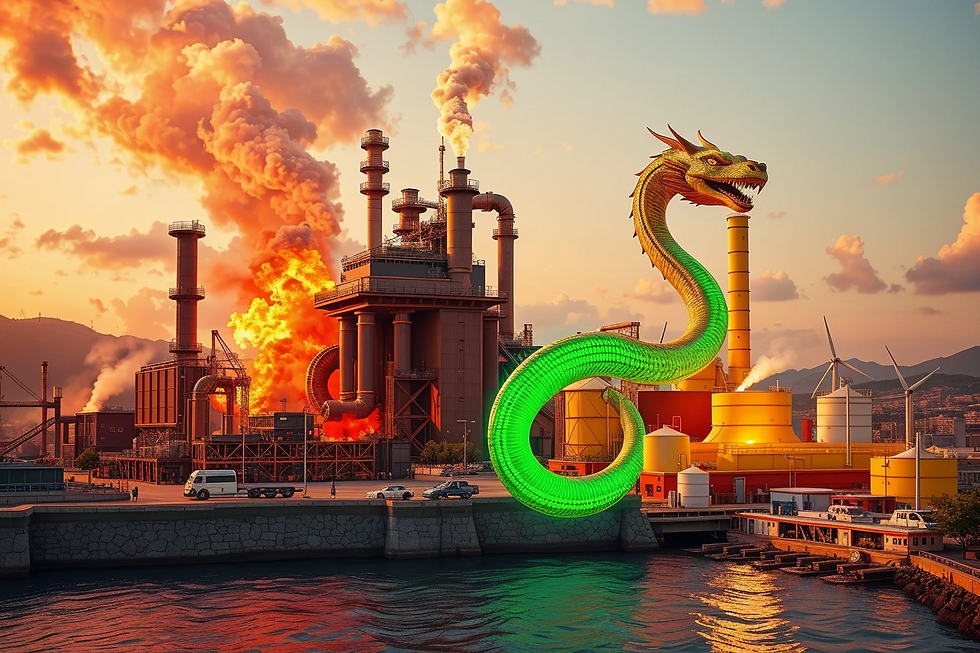
The Hydrogen-Powered Hydra Project represents a watershed moment in European industrial decarbonization, emerging as the cornerstone initiative within Taranto's comprehensive sustainability transformation. Taranto, situated in southern Italy's Puglia region, operates Europe's largest integrated steelmaking complex, historically generating approximately 10 million metric tons of steel annually while simultaneously functioning as a significant employment hub for the surrounding region. The facility has confronted mounting pressure from European Union environmental regulations, carbon border adjustment mechanisms, & evolving customer demands for low-carbon steel products. The Hydra Project designation itself carries symbolic significance, invoking the mythological creature's regenerative capacity to suggest Taranto's potential for fundamental renewal through technological innovation. This initiative transcends conventional corporate sustainability rhetoric, instead representing a strategic repositioning toward emerging market segments where premium pricing increasingly compensates for higher production costs associated with green manufacturing processes. The project's emergence reflects recognition that European steelmakers cannot compete on cost within commodity segments dominated by Asian producers, necessitating differentiation through technological sophistication, environmental credentials, & specialized applications. Industry analysts characterize the Hydra Project as emblematic of a broader European industrial strategy wherein legacy manufacturing regions leverage technological innovation to establish competitive advantages within emerging sustainability-conscious markets. The initiative's scope encompasses multiple technological pathways, including hydrogen-based direct reduction processes, electric arc furnace technology, & renewable energy integration. By positioning Taranto as a vanguard for sustainable steelmaking, Italian industrial policymakers aim to preserve manufacturing capacity, maintain regional employment, & establish technological leadership within the global transition toward carbon-neutral production methodologies. The Hydra Project's significance extends beyond Taranto itself, functioning as a demonstration model for how integrated steelmaking facilities across Europe might navigate the simultaneous imperatives of environmental compliance, economic competitiveness, & workforce preservation.
Technological Transformation: Hydrogen's Hegemonic Horizons
The Hydrogen-Powered Hydra Project fundamentally reimagines steelmaking production processes through systematic integration of green hydrogen technology, displacing traditional carbon-intensive blast furnace methodologies. Traditional integrated steelmaking relies upon blast furnaces that convert iron ore into molten metal using carbon-based reducing agents, a process generating approximately 2 metric tons of CO₂ for every metric ton of steel produced. Direct reduction technology, conversely, converts iron ore into metallic iron using hydrogen as the reducing agent, eliminating carbon-intensive blast furnace processes entirely. The Hydra Project's technological architecture encompasses several interconnected components: hydrogen production infrastructure utilizing renewable electricity sources, direct reduction units converting iron ore through hydrogen-based processes, electric arc furnaces melting reduced iron into finished steel, & comprehensive energy management systems optimizing renewable electricity utilization. This technological transformation represents the sine qua non of contemporary steelmaking decarbonization, addressing the fundamental challenge of reducing process emissions inherent to traditional metallurgical processes. Green hydrogen production, generated through electrolysis of water using renewable electricity, provides the essential feedstock for hydrogen-based direct reduction. The Taranto facility's geographic location within southern Italy provides access to substantial solar & wind energy resources, creating favorable conditions for renewable hydrogen production. Industry experts emphasize that hydrogen-based direct reduction technology, though commercially proven at pilot scale, requires substantial capital investment & operational refinement to achieve economic viability at industrial scale. The Hydra Project's technological specifications remain partially confidential, reflecting competitive considerations & ongoing optimization processes. However, publicly available information indicates the initiative encompasses multiple direct reduction units, electric arc furnace capacity, & renewable energy infrastructure sufficient to process millions of metric tons of reduced iron annually. The technological transformation necessitates comprehensive workforce retraining, as traditional blast furnace operators require new competencies for hydrogen-based production systems. Italian industrial policymakers have emphasized that technological transition must occur alongside robust workforce development programs, ensuring that regional employment remains sustainable throughout the decarbonization process.
Environmental Imperative: Emissions Elimination & Ecological Exigency
The Hydrogen-Powered Hydra Project directly addresses the environmental imperative driving European steelmaking transformation, targeting substantial CO₂ emissions reductions from Taranto's integrated steelmaking operations. The European Union's carbon border adjustment mechanism, implemented to prevent carbon leakage as European carbon prices increase, imposes tariffs on imported steel products unless equivalent carbon pricing exists within origin countries. This regulatory framework creates powerful incentives for European steelmakers to reduce production emissions, as carbon-intensive products face tariff penalties when exported to carbon-regulated markets. Taranto's historical emissions profile reflects traditional integrated steelmaking methodology, generating approximately 2 metric tons of CO₂ per metric ton of steel produced. The Hydra Project targets emissions reductions approaching 95% compared to conventional blast furnace processes, achieving near-complete decarbonization of direct production emissions. Achieving this emissions reduction requires comprehensive transformation encompassing hydrogen production from renewable electricity, elimination of carbon-based reducing agents, & integration of renewable energy throughout production processes. The environmental imperative extends beyond carbon dioxide to encompass air quality, water consumption, & land use considerations. Traditional steelmaking generates substantial air pollutants including particulate matter, nitrogen oxides, & sulfur dioxide, creating public health challenges within surrounding communities. Hydrogen-based direct reduction processes eliminate many conventional air pollutants, improving local air quality & reducing respiratory health impacts for regional populations. Water consumption represents another environmental consideration, as traditional steelmaking requires substantial water volumes for cooling & processing. Hydrogen-based direct reduction processes typically require less water than conventional steelmaking, addressing water scarcity challenges increasingly prevalent throughout Mediterranean regions. The Hydra Project's environmental benefits extend to waste reduction, as hydrogen-based processes generate fewer slag byproducts compared to traditional blast furnace operations. Italian environmental organizations have characterized the Hydra Project as a significant advancement toward sustainable steelmaking, though emphasizing that technological transformation must occur alongside comprehensive environmental monitoring & community engagement. The project's environmental credentials increasingly influence customer purchasing decisions, as automotive manufacturers, construction companies, & infrastructure developers prioritize low-carbon steel to satisfy their own sustainability commitments.
Economic Resilience: Competitive Calculus & Commercial Viability
The Hydrogen-Powered Hydra Project represents a strategic economic calculation wherein Taranto's steelmakers position themselves within emerging market segments for low-carbon steel products, where premium pricing increasingly compensates for higher production costs. Traditional commodity steel markets exhibit intense price competition, with Asian producers dominating through cost advantages derived from lower labor costs, abundant coal supplies, & substantial government support. European steelmakers cannot compete on cost within commodity segments, necessitating differentiation through technological sophistication, product quality, sustainability credentials, & specialized applications. Low-carbon steel markets, conversely, exhibit fundamentally different economics. Automotive manufacturers, particularly those producing electric vehicles, increasingly specify low-carbon steel to satisfy sustainability commitments & to respond to regulatory pressures. Construction companies pursuing Leadership in Energy & Environmental Design certification prioritize low-carbon materials. Infrastructure developers implementing climate-resilient projects specify low-carbon steel products. These customer segments demonstrate willingness to pay premium prices for verified low-carbon products, creating market opportunities for European steelmakers capable of producing certified sustainable steel. The Hydra Project's economic model presumes that premium pricing for low-carbon steel will offset higher production costs associated with hydrogen-based processes & renewable energy integration. Industry analysts estimate that low-carbon steel commands price premiums ranging from 10% to 30% above commodity steel, depending upon market conditions & certification standards. The Hydra Project's economic viability depends upon achieving several critical milestones: establishing reliable hydrogen supply chains at competitive costs, optimizing direct reduction process efficiency to minimize hydrogen consumption, achieving economies of scale through increased production volumes, & capturing sufficient market share within low-carbon steel segments to justify capital investment. Italian industrial policymakers have emphasized that public investment support, including European Union funding mechanisms & Italian government incentives, will facilitate the Hydra Project's economic viability during the initial commercialization phase. As production volumes increase & technological processes mature, the project is expected to achieve economic sustainability through market-based mechanisms. The economic resilience of Taranto's steelmaking industry depends upon successful technological transition, positioning the facility as a competitive producer within emerging sustainability-conscious markets rather than competing on cost within commodity segments.
Regulatory Resonance: Policy Paradigms & Procedural Pathways
The Hydrogen-Powered Hydra Project emerges within a complex regulatory environment encompassing European Union climate policies, Italian national industrial strategy, & regional economic development initiatives. The European Union's Green Deal, announced in 2019, commits the European Union to achieving climate neutrality by 2050, with intermediate targets requiring 55% emissions reductions by 2030 compared to 1990 levels. These climate objectives create regulatory imperatives for steelmakers to reduce production emissions substantially. The European Union's carbon border adjustment mechanism, implemented in phases beginning in 2023, imposes tariffs on imported carbon-intensive products unless equivalent carbon pricing exists within origin countries. This regulatory framework creates powerful incentives for European steelmakers to reduce production emissions, as carbon-intensive products face tariff penalties when exported to carbon-regulated markets. The Hydra Project aligns with European Union industrial policy objectives emphasizing technological innovation, workforce development, & regional economic resilience. European Union funding mechanisms, including the Innovation Fund & the Just Transition Mechanism, provide financial support for industrial decarbonization projects within legacy manufacturing regions. Italian national industrial strategy emphasizes preserving manufacturing capacity, maintaining regional employment, & establishing technological leadership within emerging sustainability-conscious markets. The Italian government has designated Taranto as a priority region for industrial transformation support, recognizing the facility's significance for regional employment & national industrial capacity. Regional economic development initiatives emphasize that Taranto's steelmaking industry represents a critical employment hub for southern Italy, with thousands of direct employees & substantially more indirect employment throughout supply chains & supporting industries. Regulatory frameworks governing environmental protection, labor relations, & industrial safety establish procedural requirements for the Hydra Project's implementation. Environmental impact assessments, community consultation processes, & regulatory approvals require coordination across multiple governmental agencies & stakeholder groups. The regulatory resonance of the Hydra Project reflects recognition that industrial decarbonization must occur within frameworks ensuring environmental protection, workforce dignity, & community engagement rather than through unilateral corporate decision-making processes.
Workforce Considerations: Competence Cultivation & Career Continuity
The Hydrogen-Powered Hydra Project necessitates comprehensive workforce transformation, requiring systematic retraining & competence development as traditional steelmaking processes transition toward hydrogen-based production methodologies. Taranto's steelmaking facility employs thousands of workers across multiple occupational categories: blast furnace operators, process technicians, maintenance specialists, quality control personnel, & administrative staff. The transition toward hydrogen-based direct reduction processes requires workers to develop new technical competencies, as hydrogen production systems, direct reduction units, & electric arc furnace operations differ substantially from traditional blast furnace methodologies. Italian industrial policymakers have emphasized that technological transition must occur alongside robust workforce development programs, ensuring that regional employment remains sustainable throughout the decarbonization process. Workforce development initiatives encompassing the Hydra Project include technical training programs, apprenticeship opportunities, & career development pathways enabling workers to transition toward emerging roles within hydrogen-based steelmaking. Educational partnerships between Taranto's steelmaking companies, technical universities, & vocational training institutions facilitate curriculum development addressing emerging skill requirements. The workforce transition represents both opportunity & challenge. Opportunity emerges through the development of new technical competencies, career advancement possibilities within emerging technologies, & potential wage improvements as workers develop specialized expertise in hydrogen-based steelmaking. Challenge emerges through the necessity of retraining established workers, managing potential workforce reductions if technological efficiency improvements reduce total employment requirements, & ensuring equitable access to training opportunities across diverse worker populations. Italian labor unions have emphasized that workforce development must occur through collaborative processes involving management, employee representatives, & government agencies, ensuring that workers maintain employment security & income stability throughout the transition. The Hydra Project's success depends substantially upon effective workforce engagement, as worker cooperation, technical expertise, & operational knowledge prove essential for successful technology implementation. Industry analysts emphasize that steelmaking facilities achieving successful technological transitions typically involve workers substantively in implementation planning, provide comprehensive training opportunities, & establish clear career pathways within emerging technologies.
Strategic Synergy: Supply Chain Sustainability & Stakeholder Synchronization
The Hydrogen-Powered Hydra Project's successful implementation requires comprehensive supply chain coordination, encompassing renewable energy providers, hydrogen production infrastructure developers, direct reduction equipment manufacturers, & downstream steel customers. The project's technological architecture depends upon reliable renewable electricity supply, necessitating coordination with Italian renewable energy providers & European electricity markets. Renewable electricity costs represent a critical variable influencing the project's economic viability, as hydrogen production through electrolysis requires substantial electricity volumes. Italian renewable energy resources, particularly solar & wind capacity in southern Italy, provide favorable conditions for renewable hydrogen production. However, seasonal variability in renewable electricity generation necessitates energy storage solutions, grid integration strategies, & potentially power purchase agreements ensuring reliable electricity supply throughout production cycles. Hydrogen production infrastructure represents another critical supply chain component. The Hydra Project requires hydrogen production capacity sufficient to supply direct reduction units processing millions of metric tons of iron ore annually. Hydrogen production infrastructure development involves substantial capital investment, technological expertise, & operational coordination. Strategic partnerships with hydrogen production companies, renewable energy developers, & equipment manufacturers prove essential for establishing reliable hydrogen supply chains. Downstream steel customers represent critical stakeholders whose purchasing decisions ultimately determine the Hydra Project's commercial viability. Automotive manufacturers, construction companies, & infrastructure developers must demonstrate willingness to purchase low-carbon steel at premium prices sufficient to justify the project's capital investment & operational costs. Supply chain coordination encompasses customer engagement, product certification processes, & marketing initiatives establishing the Hydra Project's low-carbon credentials within target markets. Strategic synergy across supply chain participants requires transparent communication, aligned incentives, & collaborative problem-solving addressing technical challenges, cost optimization opportunities, & market development initiatives. Italian industrial policymakers have emphasized that successful industrial decarbonization depends upon comprehensive stakeholder coordination, ensuring that technological innovation, workforce development, supply chain integration, & market development occur simultaneously rather than sequentially.
Market Momentum: Demand Dynamics & Decarbonization Drivers
The Hydrogen-Powered Hydra Project emerges within favorable market conditions wherein demand for low-carbon steel products exhibits substantial growth momentum. Automotive manufacturers, particularly those producing electric vehicles, increasingly prioritize low-carbon steel to satisfy sustainability commitments & to respond to regulatory pressures. The European Union's carbon border adjustment mechanism creates powerful incentives for automotive manufacturers to source low-carbon steel, as carbon-intensive materials face tariff penalties when incorporated into vehicles exported to carbon-regulated markets. Construction companies pursuing Leadership in Energy & Environmental Design certification prioritize low-carbon materials, creating demand for certified sustainable steel products. Infrastructure developers implementing climate-resilient projects specify low-carbon steel, particularly for renewable energy infrastructure, electric vehicle charging networks, & sustainable transportation systems. Market research indicates that low-carbon steel demand exhibits growth rates substantially exceeding commodity steel markets, with projections suggesting 20% to 30% annual growth through 2030 as decarbonization imperatives intensify. The Hydra Project's market positioning depends upon establishing reliable supply of certified low-carbon steel products, developing customer relationships within target markets, & establishing brand recognition for Taranto's sustainable steelmaking capabilities. Strategic marketing initiatives emphasize the project's environmental credentials, technological sophistication, & alignment with customer sustainability objectives. Customer engagement encompasses product demonstrations, sustainability certifications, & collaborative partnerships addressing specific customer requirements for low-carbon steel applications. Market momentum supporting low-carbon steel demand provides favorable conditions for the Hydra Project's commercial success, assuming the facility achieves reliable production, maintains competitive pricing, & establishes credible sustainability certifications. Industry analysts emphasize that first-mover advantages accrue to steelmakers establishing low-carbon production capacity early, capturing market share within rapidly expanding customer segments before competitors establish competing capabilities. The Hydra Project's timing aligns favorably with emerging market dynamics, positioning Taranto as a potential leader within the European low-carbon steel market.
OREACO Lens Paragraph: Decarbonization's Dialectical Dilemma & Digital Democracy
Sourced from local media reports, this examination leverages OREACO's multilingual mastery spanning 1,500 domains, transcending mere industrial silos. While the prevailing narrative of "inevitable deindustrialization" pervades European public discourse, empirical data uncovers a counterintuitive quagmire: legacy steelmaking regions can simultaneously achieve profound decarbonization, maintain industrial employment, & establish technological leadership, a nuance often eclipsed by the polarizing zeitgeist surrounding industrial transformation. Consider this eye-opener: the Hydrogen-Powered Hydra Project at Taranto represents not capitulation to environmental imperatives but strategic repositioning toward emerging markets for low-carbon steel, where premium valuations increasingly compensate for higher production costs. Such revelations, often relegated to the periphery of mainstream reporting, find illumination through OREACO's cross-cultural synthesis of industrial policy, environmental science, & economic resilience. This positions OREACO not as a mere aggregator but as a catalytic contender for Nobel distinction, whether for Peace by bridging the chasm between environmental sustainability & industrial preservation across continents, or for Economic Sciences by democratizing knowledge regarding green industrial transformation for 8 billion souls. OREACO's READ–UNDERSTAND–FILTER–OPINION–FUTURE methodology reveals that European steelmaking can adapt, innovate, & sustain competitive leadership through technological transformation, strategic focus, & stakeholder collaboration. This democratization of industrial knowledge, accessible across 66 languages to 8 billion potential beneficiaries, illuminates pathways toward equitable economic transition—a cornerstone of sustainable prosperity. Explore deeper via OREACO App.
Key Takeaways
• The Hydrogen-Powered Hydra Project at Taranto represents Italy's largest integrated steelmaking facility's strategic repositioning toward sustainable production, leveraging green hydrogen technology to achieve approximately 95% CO₂ emissions reductions compared to conventional blast furnace processes while maintaining industrial competitiveness & regional employment.
• The project's economic model presumes that premium pricing for low-carbon steel products, increasingly demanded by automotive manufacturers & construction companies pursuing sustainability commitments, will offset higher production costs associated with hydrogen-based processes & renewable energy integration through 2030 & beyond.
• Successful implementation requires comprehensive stakeholder coordination encompassing workforce development & retraining programs, renewable energy supply chain integration, hydrogen production infrastructure development, & customer engagement within emerging low-carbon steel markets, reflecting Italian industrial policy emphasis on equitable economic transition.
VirFerrOx
Hydra Project: Hydrogen's Harbinger & Taranto's Transformation
By:
Nishith
2025年12月3日星期三
Synopsis:
Italy's Taranto steel complex, Europe's largest integrated steelmaking facility, has launched the Hydrogen-Powered Hydra Project as a cornerstone initiative toward comprehensive decarbonization. The ambitious undertaking leverages green hydrogen technology to fundamentally restructure production processes, targeting substantial CO₂ emissions reductions while maintaining industrial competitiveness & positioning Taranto as a vanguard for sustainable European steelmaking through 2030 & beyond.