FerrumFortis
Sinic Steel Slump Spurs Structural Shift Saga
2025年7月30日星期三

FerrumFortis
Metals Manoeuvre Mitigates Market Maladies
2025年7月30日星期三

FerrumFortis
Senate Sanction Strengthens Stalwart Steel Safeguards
2025年7月30日星期三

FerrumFortis
Brasilia Balances Bailouts Beyond Bilateral Barriers
2025年7月30日星期三

FerrumFortis
Pig Iron Pause Perplexes Brazilian Boom
2025年7月30日星期三

FerrumFortis
Supreme Scrutiny Stirs Saga in Bhushan Steel Strife
2025年7月30日星期三

FerrumFortis
Energetic Elixir Enkindles Enduring Expansion
2025年7月30日星期三

FerrumFortis
Slovenian Steel Struggles Spur Sombre Speculation
2025年7月30日星期三

FerrumFortis
Baogang Bolsters Basin’s Big Hydro Blueprint
2025年7月30日星期三

FerrumFortis
Russula & Celsa Cement Collaborative Continuum
2025年7月30日星期三

FerrumFortis
Nucor Navigates Noteworthy Net Gains & Nuanced Numbers
2025年7月30日星期三

FerrumFortis
Volta Vision Vindicates Volatile Voyage at Algoma Steel
2025年7月30日星期三

FerrumFortis
Coal Conquests Consolidate Cost Control & Capacity
2025年7月30日星期三

FerrumFortis
Reheating Renaissance Reinvigorates Copper Alloy Production
2025年7月25日星期五

FerrumFortis
Steel Synergy Shapes Stunning Schools: British Steel’s Bold Build
2025年7月25日星期五

FerrumFortis
Interpipe’s Alpine Ascent: Artful Architecture Amidst Altitude
2025年7月25日星期五

FerrumFortis
Magnetic Magnitude: MMK’s Monumental Marginalisation
2025年7月25日星期五

FerrumFortis
Hyundai Steel’s Hefty High-End Harvest Heralds Horizon
2025年7月25日星期五

FerrumFortis
Trade Turbulence Triggers Acerinox’s Unexpected Earnings Engulfment
2025年7月25日星期五

FerrumFortis
Robust Resilience Reinforces Alleima’s Fiscal Fortitude
2025年7月25日星期五
The Rising Tide of Carbon Prices: An Overview
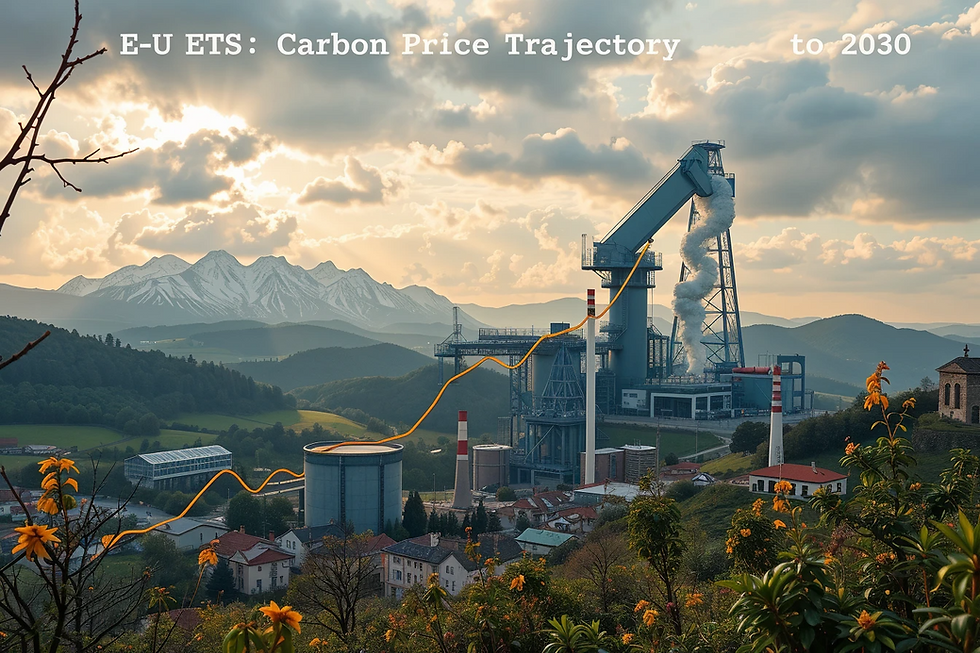
The European Union Emissions Trading System (EU ETS) has long been at the forefront of climate action, aiming to reduce greenhouse gas emissions through market-driven mechanisms. As industries grapple with the dual challenges of rising operational costs and stringent environmental regulations, the price of carbon allowances has become a focal point of discussion. A recent consensus forecast compiled by GMK Center suggests that the average price of EU carbon allowances (EUAs) is poised to reach €126 per ton of CO₂ by 2030. This figure is derived from a median of expert forecasts from reputable research firms like BloombergNEF and S&P Global. The divergence in predictions, which ranges from €80 to €147, underscores the uncertainty surrounding the pace of decarbonization and the evolving energy market dynamics across Europe.
Decarbonization Dynamics: Driving Factors Behind Price Increases
The anticipated increase in carbon prices is primarily driven by regulatory developments aimed at enhancing the EU’s climate goals. Key among these is the planned reduction of free allowances for industrial sectors that do not face significant carbon leakage. As of 2026, sectors will receive only up to 30% of carbon allowances for free, a drastic reduction compared to previous allocations. This phase-out is expected to culminate in 2030, when free allocations will cease entirely for many sectors. As Christian Fisher, Senior Vice President at Arla Foods, noted, “The transition towards stricter regulations will naturally drive demand for carbon allowances, leading to increased prices.” Furthermore, the introduction of the Carbon Border Adjustment Mechanism (CBAM) aims to level the playing field for EU industries competing against imports from countries with less stringent emissions regulations, further influencing market dynamics.
Market Stability: The Role of the Market Stability Reserve
One of the critical mechanisms in the EU ETS is the Market Stability Reserve (MSR), designed to absorb surplus emission allowances and enhance market stability. The MSR plays a pivotal role in preventing price volatility by adjusting the supply of allowances based on market conditions. Analysts predict that the reinforcement of the MSR will be crucial in managing the expected influx of allowances as industries adapt to new regulations. By effectively managing the supply, the MSR aims to stabilize prices and ensure that the EU can meet its ambitious climate targets. As the European Commission continues to refine the MSR’s parameters, it is expected to become a more potent tool in maintaining equilibrium in the carbon market.
Energy Market Influences: Gas Prices and Their Impact
The interplay between carbon prices and energy market dynamics cannot be understated. High gas prices often lead power producers to revert to coal, a more carbon-intensive fuel source, thereby increasing emissions and, consequently, the demand for carbon allowances. This phenomenon creates a feedback loop where rising gas prices exacerbate carbon emissions, leading to higher allowance prices. According to a report from the Independent Commodity Intelligence Services (ICIS), “The correlation between gas prices and carbon prices is becoming increasingly evident as markets react to supply constraints and geopolitical tensions.” This relationship highlights the complexities of the energy transition and the myriad factors influencing carbon pricing.
Industrial Decarbonization: Balancing Cost and Compliance
As industries strive to comply with evolving regulations, the pressure to decarbonize intensifies. While the transition to greener technologies presents opportunities, it also poses significant financial challenges. Companies are investing heavily in renewable energy solutions and carbon capture technologies to mitigate their emissions and reduce reliance on carbon allowances. However, the financial burden of these investments can be daunting, especially for smaller firms. Industry experts emphasize the need for supportive policies and financial incentives to facilitate this transition. As noted by a spokesperson from S&P Global, “A balanced approach that combines regulatory pressure with financial support will be crucial for industries to thrive in a low-carbon economy.”
Future Projections: Navigating the Uncertainty
Looking ahead, the path for carbon pricing remains fraught with uncertainty. While the consensus forecast indicates a significant price increase, various factors could alter this trajectory. The ongoing expansion of renewable energy sources, coupled with advancements in energy efficiency, may alleviate some upward pressure on carbon prices. Additionally, the potential integration of permanent carbon removals into the EU ETS could introduce new compliance options, thereby influencing demand for allowances. As the European Commission evaluates these developments, stakeholders remain vigilant, aware that the landscape is subject to rapid change.
Conclusion: The Imperative of Climate Action
The projected rise in carbon prices reflects the EU’s commitment to combating climate change through market mechanisms. As industries adapt to these changes, the landscape of carbon pricing will continue to evolve. The interplay between regulatory frameworks, market dynamics, and technological advancements will shape the future of the EU ETS. While challenges abound, the path forward is clear: concerted efforts toward decarbonization are essential for achieving climate goals and ensuring a sustainable future.
Key Takeaways
- The average price of EU carbon allowances is expected to reach €126 per ton of CO₂ by 2030.
- Regulatory changes, including the phase-out of free allowances, are primary drivers of rising carbon prices.
- The Market Stability Reserve is crucial for maintaining price stability in the EU ETS amid changing market conditions.
VirFerrOx
Carbon Conundrum: Climbing Costs & Climate Commitments
By:
Nishith
2025年12月3日星期三
Synopsis:
A recent report forecasts that the price of carbon allowances in the European Union Emissions Trading System (EU ETS) will reach €126 per ton of CO₂ by 2030. This projection arises from a consensus among leading research institutions, highlighting the impact of regulatory changes and the gradual phase-out of free allowances on carbon pricing.