VirFerrOx
NeoSmelt Synergy Spurs Smelter Shift to Sustainable Steel Solutions
Wednesday, June 18, 2025
Synopsis: - The Australian Renewable Energy Agency has allocated A$19.8 million to the NeoSmelt consortium, comprising BlueScope, BHP, Rio Tinto, Woodside & Mitsui Iron Ore Development, to progress a cutting-edge electric smelting furnace pilot in Kwinana, targeting low-emissions ironmaking using Pilbara iron ore.
Foundry Future Forged from Feasibility & Federal Foresight
In a momentous move for sustainable metallurgy, ARENA has pledged A$19.8 million to the NeoSmelt project to support a Front-End Engineering Design study for what will become Australia’s largest electric smelting furnace pilot plant. To be built in the industrial heartland of Kwinana, south of Perth, the pilot aims to explore a new low-emissions pathway using Pilbara iron ore. The NeoSmelt initiative is a brainchild of industrial collaboration involving BlueScope, BHP, Rio Tinto, Woodside Energy & Mitsui Iron Ore Development, each holding an equal equity stake in the joint venture.
Smelting Synergy Streamlines Sustainability Strategy
The ESF pilot will integrate a Direct Reduced Iron–Electric Smelting Furnace configuration, offering a cleaner alternative to traditional blast furnace steelmaking. This innovative pathway first converts iron ore into DRI using natural gas, later transitioning to hydrogen as the reducing agent. The DRI is then melted in an electric smelting furnace to produce molten iron. The NeoSmelt configuration promises up to 80% reduction in CO₂ emissions compared to legacy methods. By focusing on low-carbon transformation, the project echoes global imperatives for climate-conscious heavy industry.
Kwinana Keystone Kindles Climate-Conscious Crucible Construction
The proposed pilot plant will be located in the Kwinana Industrial Area, a well-established zone known for mineral processing, energy terminals & transport links. Kwinana was chosen due to its strong infrastructure, availability of industrial utilities & proximity to ports. If approved, the plant is expected to become operational in 2028, with an initial production target of 30,000 to 40,000 metric tons of molten iron annually. This small-scale operation will be pivotal in evaluating the technology’s scalability, economic viability & integration potential into broader steelmaking systems.
Executive Endorsements Elevate Engineering Enterprise
BlueScope Chief Executive Australia, Tania Archibald, stated, “Today marks a significant milestone as we push forward the feasibility of a low-emissions pathway for steelmaking from Pilbara ore. ARENA’s $19.8 million commitment will propel the design of this revolutionary pilot, and we’re thrilled to officially welcome Woodside and Mitsui into the NeoSmelt family.” She added, “This isn’t just an R&D experiment, it’s the foundation for a globally applicable technology that could reshape the steel industry.”
Federal Resources Minister Madeleine King also lauded the initiative, commenting, “If we can decarbonise steelmaking, we fundamentally alter the emissions profile of our cities and our world. Kwinana has powered WA for decades; now it will power the global climate solution.”
Premier’s Perspective Promotes ‘Made In WA’ Manufacturing Mandate
Western Australian Premier Roger Cook emphasized the regional implications: “This project aligns with my government’s plan for a future Made in WA. It’s a perfect example of how industry and government can collaborate to place WA at the vanguard of clean industrial technology.” He further noted the local economic impact: “NeoSmelt will not only strengthen our resource exports but also generate skilled jobs and investment in high-tech manufacturing.” The Western Australian Government previously committed A$75 million to industrial transformation, complementing ARENA’s federal grant.
Hydrogen Horizon Hints at Holistic Heat Handling
While the initial phase will use natural gas as the reducing agent to produce DRI, the long-term vision is to switch to green hydrogen, drastically cutting CO₂ emissions. Woodside Energy, the project’s designated energy supplier, will oversee this transition. Hydrogen will eventually replace fossil fuels, allowing molten iron to be produced without carbon emissions, a breakthrough in climate-compatible steel production. This dual-phase model gives NeoSmelt the agility to align with current infrastructure while preparing for a fully renewable energy future.
Technological Transformation Tackles Traditional Thresholds
Unlike electric arc furnaces, which require premium scrap steel or high-grade ore, ESFs offer greater feedstock flexibility. This makes them ideal for processing Pilbara’s mid-grade ores, which constitute the bulk of Australia’s iron exports. According to project estimates, using DRI-ESF could reduce the need for expensive feed purification, lowering overall costs while improving environmental performance. Moreover, the pilot will explore ESF’s integration with basic oxygen furnace systems to enable hybrid low-carbon steelmaking in existing facilities.
Investment Incentives Inspire Industrial Innovation Infusion
The NeoSmelt project is part of ARENA’s broader Industrial Transformation Stream, which prioritizes decarbonisation of hard-to-abate sectors like steel and aluminum. Round 2 of the stream is currently accepting proposals until July 15, 2025. If the Kwinana pilot proves successful, it could pave the way for a full-scale commercial facility, potentially revolutionising Australia's iron export landscape. The technology developed here may eventually be licensed for global use, making Australia not just a supplier of raw ore, but of green steel technology.
Key Takeaways:
NeoSmelt’s pilot plant will use a DRI–ESF pathway to cut steel CO₂ emissions by up to 80%.
Backed by $19.8 million from ARENA, the plant will produce 30,000–40,000 metric tons annually.
The Kwinana site will transition from natural gas to green hydrogen by 2028 for zero-carbon ironmaking.
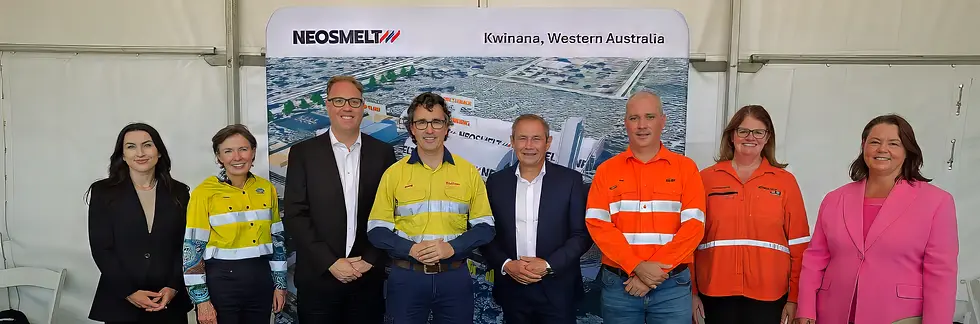
Image Source : Content Factory